/filters:format(jpeg,png)/fit-in/300x300/guide_websites/3826/images/img_0114.png)
/filters:format(jpeg,png)/fit-in/237x80/guide_websites/3826/images/img_0114.png)

Everglades Freshwater Fishing: Your Ultimate Guide to Catching Bass & More
%2Ffit-in%2F1000x1000%2Ffilters%3Aformat(webp)%2Fguide_websites%2F3826%2Fimages%2F1757462873614img_16812.jpeg&w=1920&q=75)
Published: November 17, 2025
Match the Hatch
Mimic the local forage, such as baitfish or crustaceans, with your lures to increase your success rate. Check our guide on lure selection for the Everglades.
Explore Canals and Backwaters
The Everglades is vast, so don’t hesitate to move between canals and marshy backwaters to locate active fish. Variety is key to finding where the fish are biting.
Cast Near Cover
Bass and other species often hide in vegetation or under overhangs. Accurate casting is crucial for enticing these hidden predators. Consider using a fishing guide from Guidesly to get the best experience
Safety and Comfort in the Everglades
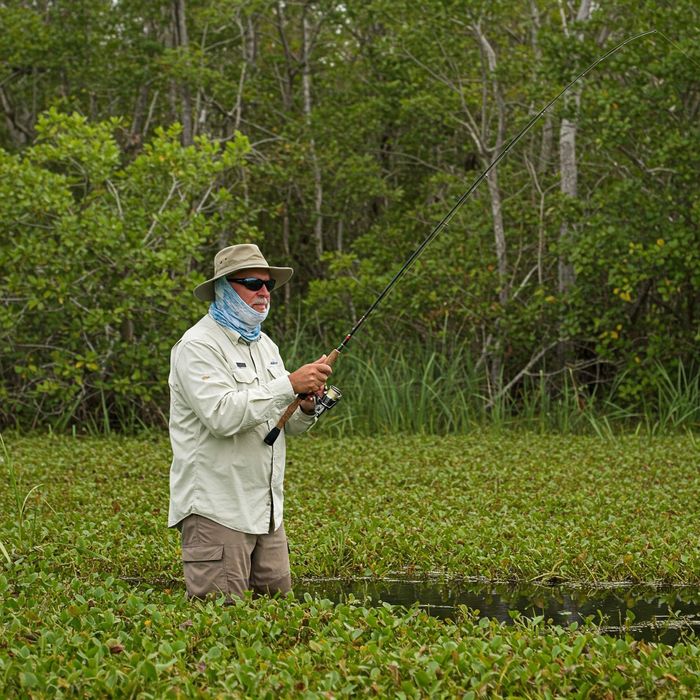
- Protect Against Sun and Bugs: Wear sunscreen, a wide-brimmed hat, and long-sleeved clothing to avoid sunburn. Use insect repellent to ward off mosquitoes and biting flies.
- Stay Hydrated: Bring plenty of water, as the Everglades can be hot and humid, even in cooler months.
- Boat or Kayak Fishing: A small boat, kayak, or canoe is ideal for exploring canals and marshes. Ensure you carry essential safety gear, including a life jacket and whistle.
- Be Wildlife Aware: Maintain a safe distance from alligators and other wildlife. Avoid leaving fish scraps in the water to prevent attracting unwanted attention.
Choosing the Right Boat for Your Everglades Adventure
Navigating the Everglades requires boats designed to handle its unique environment – shallow waters, dense vegetation, and narrow channels. The best boat depends on your fishing or exploration goals.
1. Flats Boats
Best For: Shallow water fishing, targeting species like snook, redfish, and largemouth bass.
Description: Designed for poling through shallow flats and marshes, with a shallow draft of 5-10 inches and a poling platform for sight fishing.
Advantages: Accesses skinny water areas, providing a stable casting platform.
Considerations: Limited capacity (1-3 people).
2. Jon Boats
Best For: Exploring canals, marshes, and fishing small freshwater areas.
Description: Lightweight, flat-bottomed boats made from aluminium or fiberglass, typically powered by a small outboard or electric trolling motor.
Advantages: Affordable and easy to maneuver in tight spaces with a minimal draft.
Considerations: Lacks comfort and protection from the elements.
3. Airboats
Best For: Navigating marshes, swamps, and areas with dense vegetation or no water channels.
Description: Flat-bottomed boats propelled by an above-water fan engine, designed to glide over vegetation, mud, and shallow water.
Advantages: Accesses areas inaccessible to other boats, ideal for exploration and wildlife viewing.
Considerations: Loud operation and limited practicality for fishing. Requires an experienced operator.
4. Canoes and Kayaks
Best For: Quiet exploration and fishing in narrow, hard-to-reach areas.
Description: Lightweight, human-powered vessels with easy portability. Kayaks can be sit-on-top or sit-inside; canoes offer more storage.
Advantages: Silent operation, great for wildlife viewing and fishing. Extremely maneuverable and affordable.
Considerations: Limited range and more physically demanding than motorized options.
5. Skiffs
Best For: Fishing in shallow flats or deeper channels.
Description: Similar to flats boats but slightly larger and more versatile, designed for stability and comfort with a shallow draft.
Advantages: Handles shallows well while offering more space and comfort than smaller boats.
Considerations: Not as maneuverable in extremely tight spaces.
6. Bay Boats
Best For: Deeper areas of the Everglades or brackish waters near the Gulf and Atlantic.
Description: A hybrid between flats boats and offshore vessels with slightly deeper drafts. Ideal for fishing in shallow and moderate-depth waters.
Advantages: Versatile for multiple environments, with more storage and seating options.
Considerations: Cannot navigate extremely shallow areas.
7. Paddleboards
Best For: Solo fishing and exploration in ultra-shallow areas.
Description: Stand-up paddleboards equipped for fishing with rod holders and storage options.
Advantages: Lightweight, quiet, and perfect for sneaking up on fish.
Considerations: Limited range and requires good balance.
8. Inflatable Boat
Best For: Portable exploration and lightweight fishing.
Description: Compact, inflatable crafts with rigid floors or soft bottoms, often paired with a small motor or paddles.
Advantages: Easy to transport and store, suitable for small, calm waters.
Considerations: Less durable than other options and not ideal for areas with heavy vegetation.